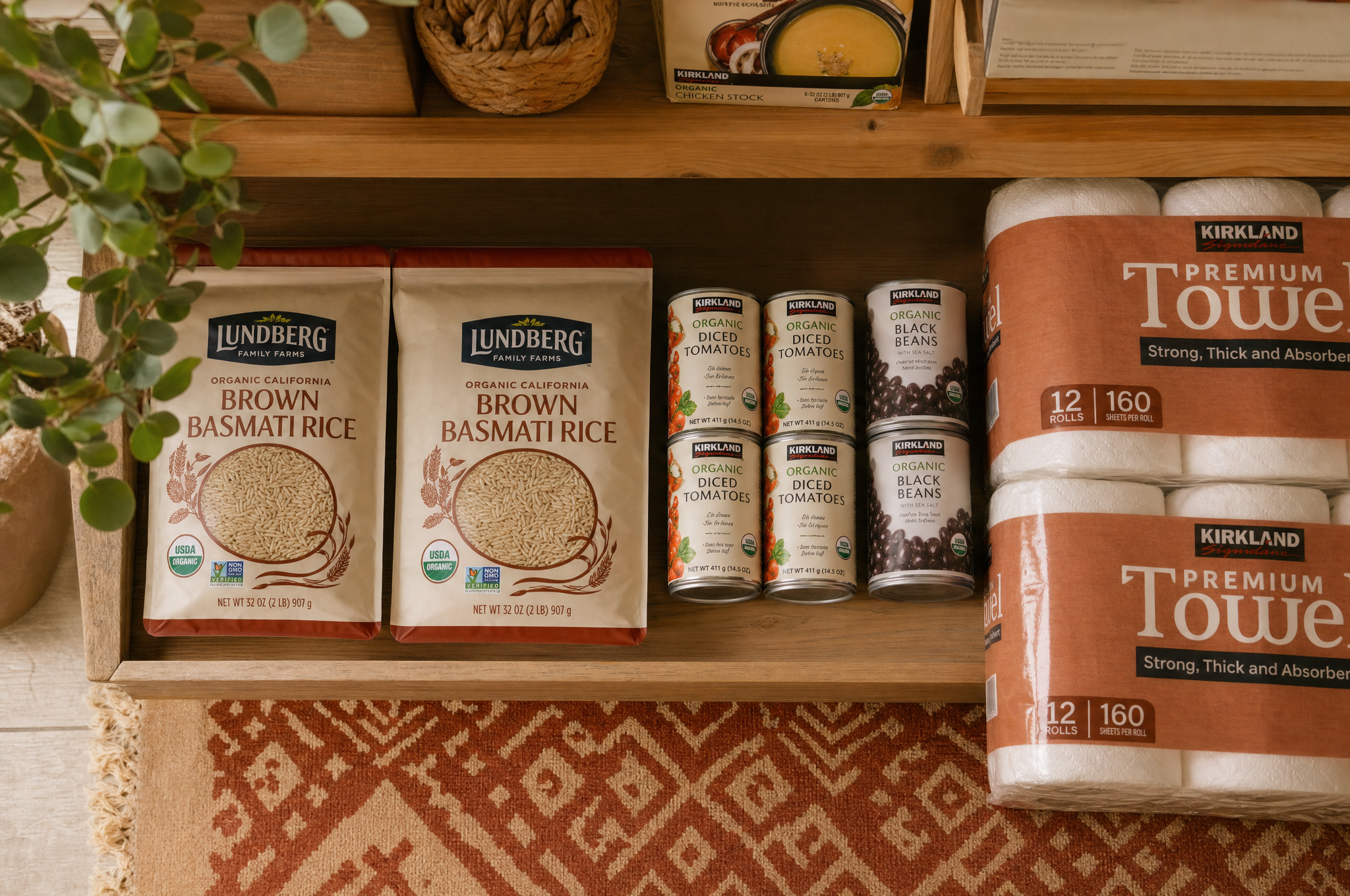
"It's such a good deal!" my sister said, motioning at the 20-pound bag of rice she'd just hauled out of Sam's Club. "It's like half the price per pound."
I looked at the bag. Then I looked at her kitchen — a small apartment with a pantry the size of a bookshelf. That rice would take her two years to eat. And she'd paid $38 for it, when the 5-pound bag she usually bought cost $4.50 at the grocery store.
The per-ounce price was indeed lower. But the total cost was higher, the storage was impractical, and she was tying up cash in rice she wouldn't consume for months. That's the hidden math of bulk buying that nobody talks about.
Warehouse clubs can absolutely save you money — but only if you know which items to buy, which to skip, and how to account for the real costs of bulk purchasing.
The membership math
Before you even walk through the door, a warehouse club costs money. The basic memberships:
| Club | Basic Membership | Premium Tier |
|---|---|---|
| Costco Gold Star | $65/year | $130/year (Executive) |
| Sam's Club Club | $50/year | $110/year (Plus) |
| BJ's Inner Circle | $55/year | $110/year (Perks) |
To break even on a $65 membership, you need to save at least $65 over the course of the year compared to what you'd spend at a regular grocery store. That sounds easy — until you realize you need to track the comparison to know if you're actually winning.
What's actually cheaper at warehouse clubs
After tracking prices across Costco, my local Kroger, and Aldi for six months, here's where warehouse clubs genuinely win:
Clear winners
- Rotisserie chicken. Costco's $4.99 rotisserie chicken is a loss leader. You cannot buy a raw chicken and roast it for less.
- Gasoline. Club gas is typically 10-20 cents cheaper per gallon. If you drive enough, this alone can pay for the membership.
- Prescription medications. Costco's pharmacy prices frequently beat other pharmacies, and you don't need a membership to use the pharmacy (by federal law).
- Tire installation and rotation. The combined price of tires plus installation is often lower than standalone tire shops.
- Paper goods and cleaning supplies. Toilet paper, paper towels, and bulk cleaning solutions are genuinely cheaper per unit.
- Cheese and deli meats. A 2-pound block of cheddar at Costco runs about 30-40% less per ounce than the grocery store equivalent.
- Frozen foods. Frozen fruit, vegetables, and fish are consistently cheaper and high quality.
The "it depends" category
- Meat and poultry. The per-pound price is often lower, but the package sizes are enormous. You need freezer space and a plan to portion and freeze. If you waste any to spoilage, you've lost the savings.
- Pantry staples. Flour, sugar, rice, and pasta are cheaper per ounce but come in quantities most households can't use before they go stale or attract pests.
- Produce. The prices look great, but the quantities are massive. A 5-pound container of strawberries for $6 is a great deal — if you eat them before they mold. If half go bad, you've paid $3 for spoiled produce.
The spoilage factor is the silent killer of bulk savings. Any food you throw away is a 100% loss — no coupon or bulk discount can recover it.
What to never buy at warehouse clubs
- Condiments and spices. A gallon of ketchup or a pound of garlic powder will expire before you use it. Buy these at the regular store in normal sizes.
- Dairy in bulk. Milk and yogurt have short shelf lives. Unless you have a large family, the warehouse quantities lead to waste.
- Novelty and seasonal items. Those giant gift sets and seasonal displays are impulse purchases, not savings.
- Electronics and clothing. Prices are decent but not necessarily the lowest. Online retailers and sale cycles at department stores often beat warehouse prices.
The hidden costs of bulk
Beyond the membership fee, bulk buying has hidden costs that eat into your savings:
- Storage. You need space for 24 rolls of paper towels and a 10-pound bag of flour. If you rent a storage unit or buy a larger freezer to accommodate bulk purchases, factor that cost in.
- Spoilage. Food has a shelf life. The USDA estimates the average American household wastes 30% of the food it buys. Bulk buying amplifies this risk.
- Capital tied up. Spending $200 on bulk groceries means $200 you can't spend on something else this month. For households on tight monthly budgets, this matters.
- Impulse buying. Warehouse clubs are designed to make you buy things you didn't plan to. The average Costco trip is $150+ — significantly more than a grocery trip. If you wouldn't have bought those items at all, it's not a saving.
The Real Savings Test
Before buying anything in bulk, divide the total cost by the number of uses you'll realistically get before it expires or you move. That's your true per-use cost. Compare it to the regular-store alternative. Only buy bulk if the real per-use cost is lower.
The Aldi alternative
Here's a secret: for many items, Aldi is cheaper than warehouse clubs — without the membership fee, without the bulk quantities, and without the storage headache. I tracked 30 common grocery items over three months and Aldi beat or matched Costco on 22 of them, in normal household sizes.
If you live near an Aldi (or Lidl), you may not need a warehouse membership at all. The warehouse clubs win on specific items — rotisserie chicken, gas, tires, paper goods — but for general groceries, the discount grocer is often the better play.
My recommendation
A warehouse club membership is worth it if you can answer "yes" to most of these:
- You have a household of 3+ people (or entertain frequently)
- You have adequate storage space (pantry and freezer)
- You'd save at least $65/year on gas alone (at 15 cents/gal savings, that's about 430 gallons)
- You buy the "clear winner" items regularly
- You can resist impulse purchases (this is the hardest one)
If you're a single person or a couple in a small apartment with no storage, skip the membership. You'll save more by shopping grocery sale cycles at a regular store and using rebate apps.
My sister? She returned the rice. She kept the membership because the gas savings alone covered it. But she now shops the warehouse club with a list, not a cart-pushing free-for-all.
That's the real lesson: bulk buying rewards intentionality and punishes impulse. Buy what you'll use, track the real per-use cost, and never let the "deal" override common sense.